Meet Yago, your business partner on WhatsApp
Meet Yago, your business partner on WhatsApp
Oct 1, 2025
AI agents vs human attention: who sells better in e-commerce?
Can artificial intelligence agents outperform human service in e-commerce?
Silvana Cabrera
Your store may have the best products, perfect photos, and irresistible prices. But if someone writes on WhatsApp and doesn't get a quick response, that sale is gone. 💸
Customer service is the real breaking point in online sales. An unanswered message or a poorly handled inquiry can cost more than a poorly targeted campaign. That's why more and more businesses are asking themselves the same question:
👉 Is it better to continue with human teams or invest in artificial intelligence agents that attend and sell 24/7?
In this article, I'm going to tell you what sets an AI agent apart from a traditional human team, what their real advantages are, what limitations they have, and how to combine them to offer faster, more personalized, and profitable customer service.

What is really an AI agent?
An AI sales agent is not a chatbot with pre-programmed phrases. It is a digital salesperson capable of understanding your customers, maintaining natural conversations, and closing sales without human intervention.
While a chatbot only responds to what it is taught, an AI agent understands the context, detects the purchase intent, and adapts its response according to each customer. Its advantage is not in speaking nicely but in selling while you do other things.
This is how it works in practice:
Understands the conversation and knows when someone is ready to buy or just needs information.
Recommends products from your catalog based on what the customer is looking for or has bought before.
Solves inquiries and validates payments within the same chat, without forcing the user to switch channels.
Learns with each interaction, improving its tone, speed, and accuracy over time.
In current e-commerce, these agents are the equivalent of having a sales team that never sleeps, attends to everyone instantly, and keeps your brand active 24/7.
personal.
Traditional customer service

No AI can match something key: human empathy. A good advisor understands emotions, reads between the lines, and can solve those cases where the important thing is not just answering, but how it is answered. That closeness generates trust and builds lasting relationships.
But that same model has a high cost when it comes to scaling:
💰 High operational costs: salaries, training, shifts, and constant turnover.
⏰ Limited response times: outside business hours, service simply shuts down.
📈 Restricted scalability: to serve more customers, you need to hire more people.
In an environment where customers expect responses in seconds, relying solely on human teams is no longer sustainable. That's why many businesses are combining the best of both worlds: human empathy + AI speed.
AI Agents vs. Human Attention: Direct Comparison
In practice, it's not about who “replaces” who, but rather what each does better. Both models have clear strengths and inevitable limitations. The difference is in how you use them: while the human team provides empathy and connection, AI offers speed and scale.
This is how they compare in the key aspects of e-commerce 👇
Aspect | AI Agents | Traditional Human Attention |
🕐 Speed and Availability | Operate 24/7, respond in seconds, and manage thousands of simultaneous conversations. | Limited by schedules and the individual capacity of each agent. |
💰 Costs and Scalability | Reduce costs by automating repetitive tasks and scaling without increasing payroll. | Each new channel or increase in volume requires more hires and higher operating costs. |
💬 Customer Experience | Provide fast and consistent responses, but may fail in highly emotional interactions. | Excel in empathy, negotiation, and handling sensitive cases. |
🛒 Sales Results | On WhatsApp, they already complete sales from start to finish: respond, show catalogs, and process payments. | More effective in B2B or high-ticket sales, where the relationship is as important as the product. |
Real Use Cases in LATAM
I've seen how businesses in retail and fashion, by implementing a virtual sales agent, managed to reduce response times from hours to seconds and increase conversion by up to 30%. In high-volume e-commerce, AI handles questions about sizes, stock, and shipments without overwhelming the human team.
On the other hand, in sectors like real estate, education, or high-value products, human attention remains key: the chatbot vs. humans is not a direct competition, but a collaboration. AI handles the repetitive, while the advisor focuses on strategic interactions.
The Future of Customer Service with AI
The era of basic chatbots is already over. The next step is intelligent assistants capable of operating on their own, understanding context, and turning conversations into sales without relying on a human team.
These new AI agents not only respond:
👉 Analyze emotions, recognize the purchase intent, and adjust the tone of the conversation.
👉 Learn from each interaction, improving their accuracy over time.
👉 Complete sales: show catalogs, recommend products, and process payments within the same chat.
Tools like Yavendió! already make it possible. Their AI agent for WhatsApp serves 24/7, maintains natural conversations, and manages the purchase process from start to finish. The result is a completely autonomous customer service model, freeing the business from operational burdens and ensuring no customer is left without a response.
In the near future, most human teams will stop responding to chats to focus on strategy and growth. Direct attention will be in the hands of more intelligent, empathetic, and self-sufficient AI assistants, like Yavendió!: digital sellers that never rest, never forget, and learn every day to sell more.
Conclusion: ⚡ We are already living in the new era of customer service
The conversation is no longer “AI or humans”, but how far your business can go with an intelligent assistant. While the traditional model continues to depend on schedules and staff, AI is learning to understand, converse, and sell without human intervention.
By 2025, the most competitive e-commerce businesses will not be those with the most advisors, but those with autonomous digital sellers, capable of attending, recommending, and closing sales 24 hours a day.
And that future has already begun with tools like Yavendió!, the AI assistant that transforms your chats into real sales, without waiting or effort.
✨ Create your AI seller for WhatsApp and take your service to the next level.
FAQ
What differentiates a chatbot from an AI agent?
A chatbot answers with predefined phrases; an AI agent understands the context, personalizes, and performs actions like payments or recommendations.
Will AI agents replace humans?
Not entirely. AI automates most repetitive interactions, but humans remain key in complex or high-value cases.
What impact do they have on service costs?
Chatbot costs are usually lower because a single AI agent replaces hundreds of interactions. In contrast, the human team requires more investment in payroll and training.
How is the effectiveness of an AI agent measured?
With metrics like response times, automatic resolution rates, and conversions generated in channels like WhatsApp.
Your store may have the best products, perfect photos, and irresistible prices. But if someone writes on WhatsApp and doesn't get a quick response, that sale is gone. 💸
Customer service is the real breaking point in online sales. An unanswered message or a poorly handled inquiry can cost more than a poorly targeted campaign. That's why more and more businesses are asking themselves the same question:
👉 Is it better to continue with human teams or invest in artificial intelligence agents that attend and sell 24/7?
In this article, I'm going to tell you what sets an AI agent apart from a traditional human team, what their real advantages are, what limitations they have, and how to combine them to offer faster, more personalized, and profitable customer service.
What is really an AI agent?
An AI sales agent is not a chatbot with pre-programmed phrases. It is a digital salesperson capable of understanding your customers, maintaining natural conversations, and closing sales without human intervention.
While a chatbot only responds to what it is taught, an AI agent understands the context, detects the purchase intent, and adapts its response according to each customer. Its advantage is not in speaking nicely but in selling while you do other things.
This is how it works in practice:
Understands the conversation and knows when someone is ready to buy or just needs information.
Recommends products from your catalog based on what the customer is looking for or has bought before.
Solves inquiries and validates payments within the same chat, without forcing the user to switch channels.
Learns with each interaction, improving its tone, speed, and accuracy over time.
In current e-commerce, these agents are the equivalent of having a sales team that never sleeps, attends to everyone instantly, and keeps your brand active 24/7.
personal.
Traditional customer service
No AI can match something key: human empathy. A good advisor understands emotions, reads between the lines, and can solve those cases where the important thing is not just answering, but how it is answered. That closeness generates trust and builds lasting relationships.
But that same model has a high cost when it comes to scaling:
💰 High operational costs: salaries, training, shifts, and constant turnover.
⏰ Limited response times: outside business hours, service simply shuts down.
📈 Restricted scalability: to serve more customers, you need to hire more people.
In an environment where customers expect responses in seconds, relying solely on human teams is no longer sustainable. That's why many businesses are combining the best of both worlds: human empathy + AI speed.
AI Agents vs. Human Attention: Direct Comparison
In practice, it's not about who “replaces” who, but rather what each does better. Both models have clear strengths and inevitable limitations. The difference is in how you use them: while the human team provides empathy and connection, AI offers speed and scale.
This is how they compare in the key aspects of e-commerce 👇
Aspect | AI Agents | Traditional Human Attention |
🕐 Speed and Availability | Operate 24/7, respond in seconds, and manage thousands of simultaneous conversations. | Limited by schedules and the individual capacity of each agent. |
💰 Costs and Scalability | Reduce costs by automating repetitive tasks and scaling without increasing payroll. | Each new channel or increase in volume requires more hires and higher operating costs. |
💬 Customer Experience | Provide fast and consistent responses, but may fail in highly emotional interactions. | Excel in empathy, negotiation, and handling sensitive cases. |
🛒 Sales Results | On WhatsApp, they already complete sales from start to finish: respond, show catalogs, and process payments. | More effective in B2B or high-ticket sales, where the relationship is as important as the product. |
Real Use Cases in LATAM
I've seen how businesses in retail and fashion, by implementing a virtual sales agent, managed to reduce response times from hours to seconds and increase conversion by up to 30%. In high-volume e-commerce, AI handles questions about sizes, stock, and shipments without overwhelming the human team.
On the other hand, in sectors like real estate, education, or high-value products, human attention remains key: the chatbot vs. humans is not a direct competition, but a collaboration. AI handles the repetitive, while the advisor focuses on strategic interactions.
The Future of Customer Service with AI
The era of basic chatbots is already over. The next step is intelligent assistants capable of operating on their own, understanding context, and turning conversations into sales without relying on a human team.
These new AI agents not only respond:
👉 Analyze emotions, recognize the purchase intent, and adjust the tone of the conversation.
👉 Learn from each interaction, improving their accuracy over time.
👉 Complete sales: show catalogs, recommend products, and process payments within the same chat.
Tools like Yavendió! already make it possible. Their AI agent for WhatsApp serves 24/7, maintains natural conversations, and manages the purchase process from start to finish. The result is a completely autonomous customer service model, freeing the business from operational burdens and ensuring no customer is left without a response.
In the near future, most human teams will stop responding to chats to focus on strategy and growth. Direct attention will be in the hands of more intelligent, empathetic, and self-sufficient AI assistants, like Yavendió!: digital sellers that never rest, never forget, and learn every day to sell more.
Conclusion: ⚡ We are already living in the new era of customer service
The conversation is no longer “AI or humans”, but how far your business can go with an intelligent assistant. While the traditional model continues to depend on schedules and staff, AI is learning to understand, converse, and sell without human intervention.
By 2025, the most competitive e-commerce businesses will not be those with the most advisors, but those with autonomous digital sellers, capable of attending, recommending, and closing sales 24 hours a day.
And that future has already begun with tools like Yavendió!, the AI assistant that transforms your chats into real sales, without waiting or effort.
✨ Create your AI seller for WhatsApp and take your service to the next level.
FAQ
What differentiates a chatbot from an AI agent?
A chatbot answers with predefined phrases; an AI agent understands the context, personalizes, and performs actions like payments or recommendations.
Will AI agents replace humans?
Not entirely. AI automates most repetitive interactions, but humans remain key in complex or high-value cases.
What impact do they have on service costs?
Chatbot costs are usually lower because a single AI agent replaces hundreds of interactions. In contrast, the human team requires more investment in payroll and training.
How is the effectiveness of an AI agent measured?
With metrics like response times, automatic resolution rates, and conversions generated in channels like WhatsApp.
Oct 1, 2025
Discover More

¿Cuántos mensajes estás perdiendo al día? Elige el plan de YaVendió! según la etapa de tu negocio 📩
¿Cuántos mensajes estás perdiendo al día? Elige el plan de YaVendió! según la etapa de tu negocio 📩
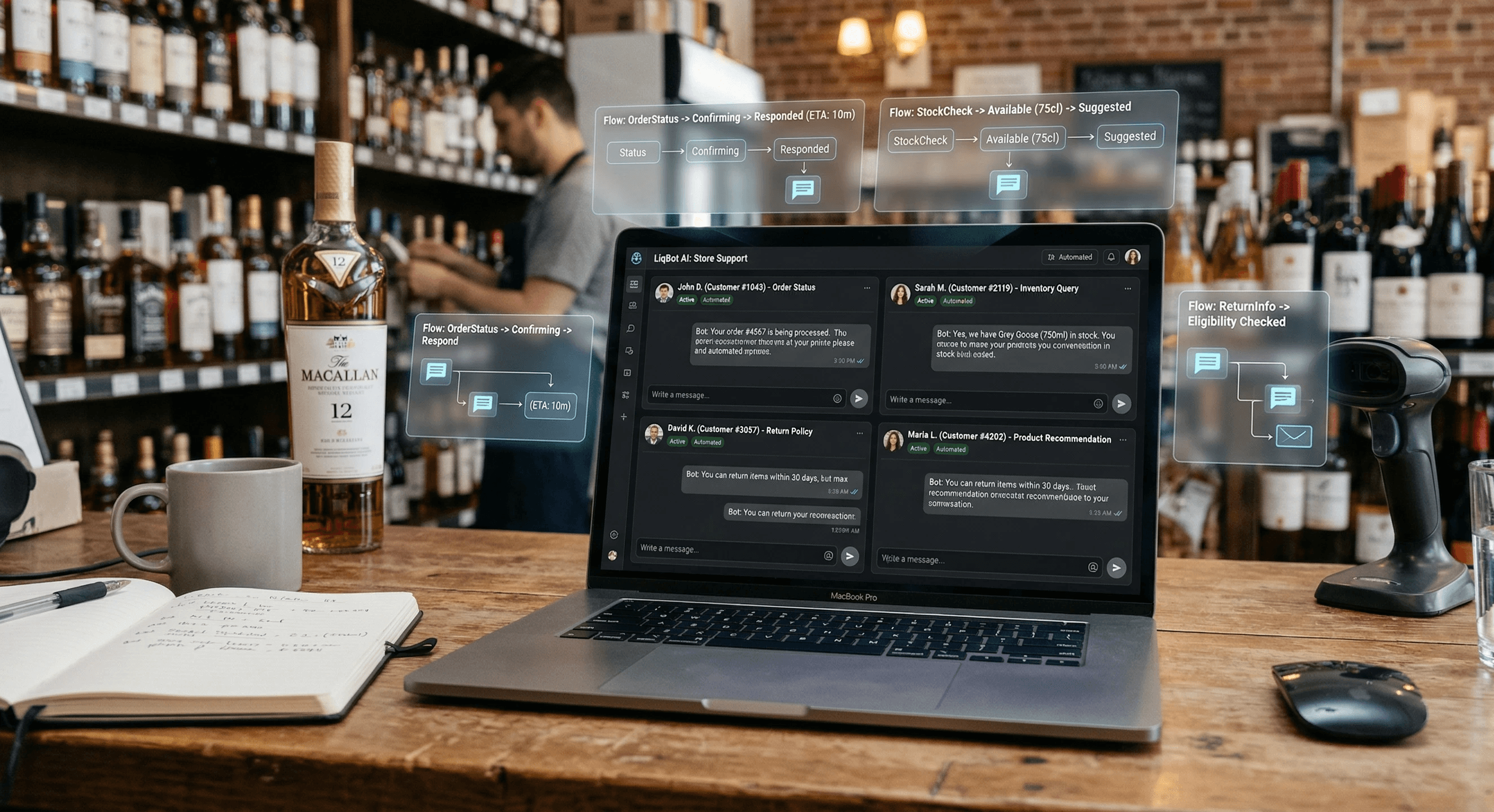
Don Chelero: de perder pedidos a vender más con cada mensaje. 🍷
Don Chelero: de perder pedidos a vender más con cada mensaje. 🍷
Bring the magic to your sales TODAY!
Get a demo


Bring the magic to your sales TODAY!
Get a demo
@2024 YA VENDIO - All rights reserved
@2024 YA VENDIO - All rights reserved