Meet Yago, your business partner on WhatsApp
Meet Yago, your business partner on WhatsApp
Oct 13, 2025
How to Use Artificial Intelligence in Whatsapp to Perform Automatic Upselling and Cross-Selling
Use artificial intelligence in WhatsApp Business to automate conversations and increase your average ticket size.
Silvana Cabrera
WhatsApp has become the most direct and profitable channel for selling in LATAM. But if you only use it to respond to messages, you're leaving money on the table. Artificial intelligence can help you identify sales opportunities within each conversation: recommend products, offer premium versions, and retain customers effortlessly.
In this practical guide, I will tell you how to apply automatic upselling and cross-selling with AI in WhatsApp Business. I will show you how conversational flows work, how to segment customers, and how to turn data into real revenue.
💬 Why WhatsApp is the ideal channel to sell more

WhatsApp is the space where conversation feels natural. There are no forms or waits: just messages, quick responses, and trust. This closeness makes users more open to receiving suggestions if they feel attended to and understood.
Additionally:
📲 8 out of 10 people in LATAM prefer to contact via WhatsApp rather than email or networks.
💬 Conversations have a conversion rate 2.5x higher than other channels.
🤝 AI allows scaling without losing that human touch that makes the customer feel they are being spoken to, not just another entry in a database.
👉 If you are not yet generating traffic to your chats, check out how to do it with a step-by-step Meta Ads campaign.
⚙️ How artificial intelligence works in WhatsApp Business
AI not only responds to messages: it understands intention, context, and opportunity. It analyzes key phrases (“price,” “stock,” “promotion”), message tone, and historical behavior to determine the best response or recommendation.
This achieves three key tasks:
Detect purchase intent: recognizes when a user is close to making a purchase.
Recommend products or upgrades: offers complementary options or premium versions.
Personalize responses: adapts language, emojis, and offers to the type of customer.
💡 Example:
Customer: “Do you have waterproof backpacks?”
AI: “Yes 👌 and if you get the 25L version, it now includes a free rain cover. Would you like me to show you the available colors?”
👉 In our article on AI agents vs traditional customer service, we explain how these systems learn from each conversation and improve over time.
🚀 How to apply automatic upselling with AI
The upselling seeks for the customer to choose a superior version of the product or service they are already interested in. With AI, this process can be automated and sound natural, not forced.
💬 Practical strategies:
Activate contextual suggestions: if someone asks for a basic plan, offer the premium one highlighting benefits, not price. “For S/30 more, you get personalized support and an extended warranty 💪.”
Use urgency or convenience triggers: limited promotions, free shipping, or upgrades with added value.
Base it on history: AI can remember previous purchases and offer the next version or upgraded model.
🔥 Tip: the secret of effective upselling is in the copy. Learn to write persuasive messages in our copywriting guide for ads with AI.
🔄 How to apply intelligent cross-selling
The cross-selling seeks to complement what the customer is already going to buy. AI does this by analyzing real-time data and behavior patterns.
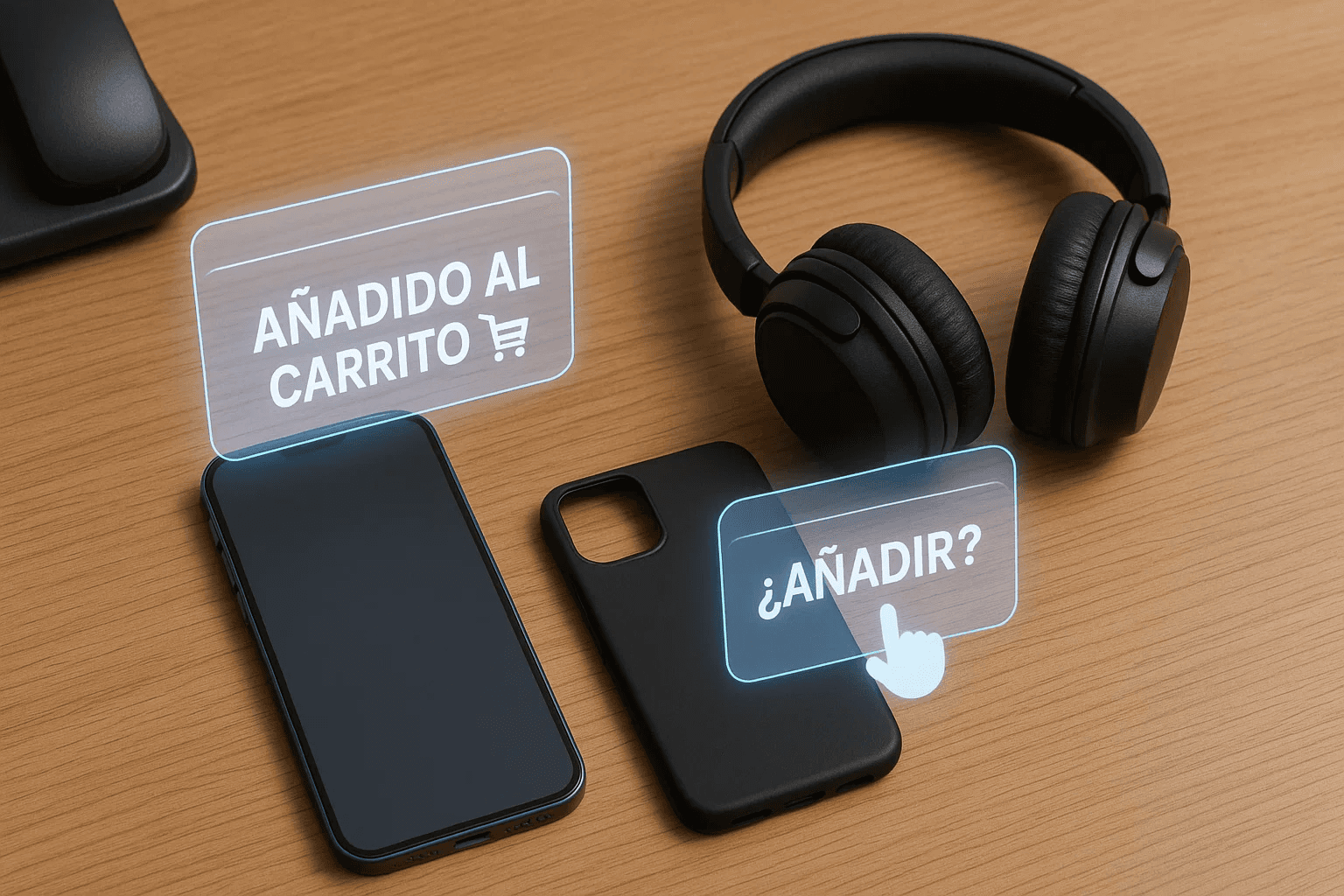
Classic example: if someone buys a camera, AI can offer a tripod, a case, or a memory card. But the important thing is when it does so: it should suggest it right before the final decision, not at the beginning.
📊 How to configure it:
Define complementary products by category (AI should know what goes with what).
Set conditional rules (“if buying X, offer Y”).
Personalize the response according to the customer's tone.
💬 Example:
“Perfect 🎥 I see you chose the Canon M50 camera. If you add a tripod, shipping is free. Are you interested in including it?”
👉 Learn how to improve the visual presentation of your products with product pages that convert.
🧩 How to design conversational flows with AI
A well-designed flow is like a digital seller: it guides, listens, and recommends.
💡 Ideal structure:
Personalized greeting: use the name and friendly tone.
Intent detection: AI interprets what the customer is looking for.
Contextual offer: responds with a clear and relevant proposal.
Closure with call to action: takes the conversation to the next step (“Do you want me to send you the link to purchase?”).
The best flows use variables such as location, time of day, or product category to refine the message. Thus, each conversation feels unique, even though it is automated.
👉 If you want to measure which messages work best, check out our guide to analyzing social media stats. It will help you interpret your conversation metrics.
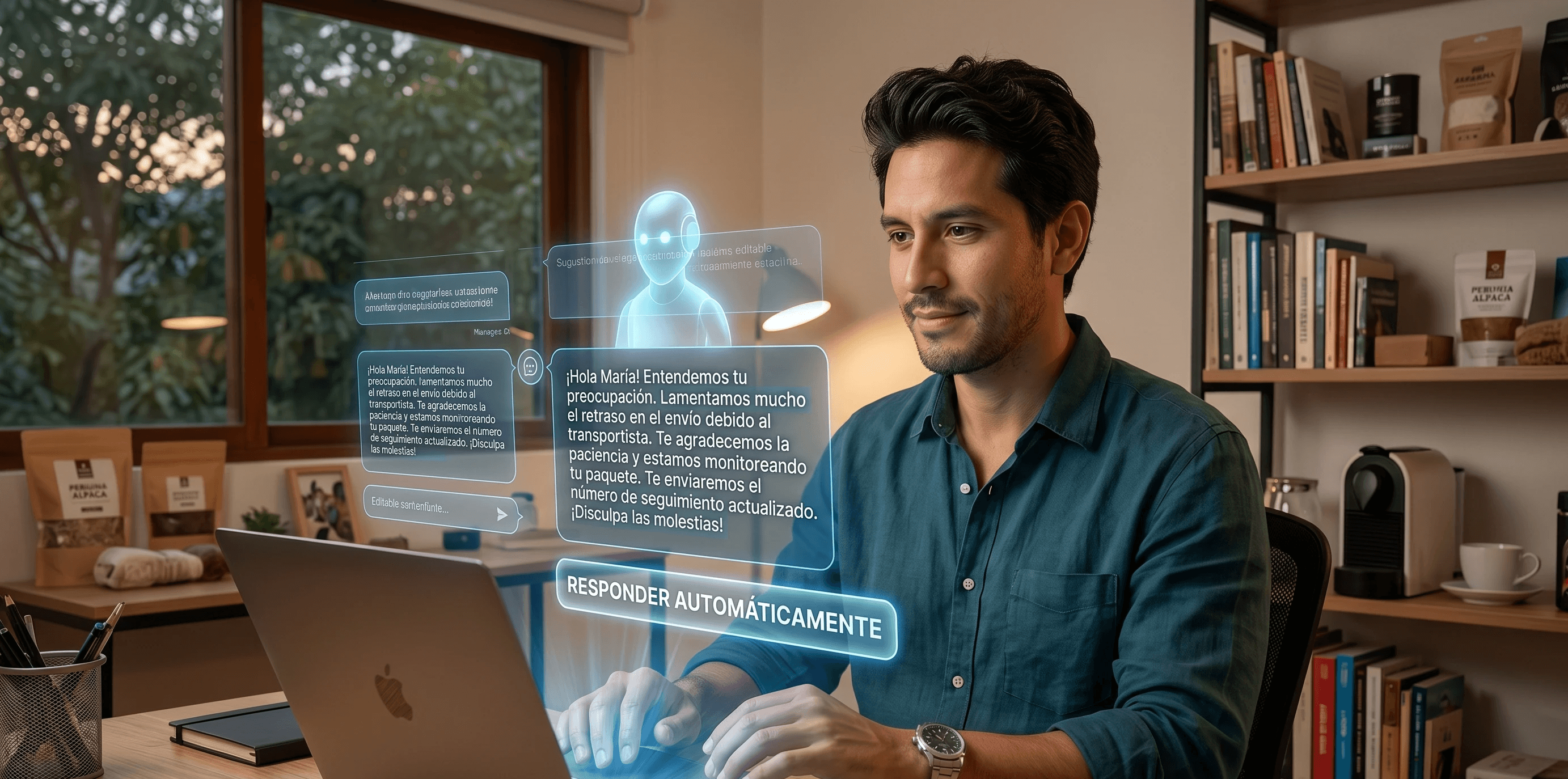
Automation platforms like Yavendió! allow you to create these flows visually and add conversational AI that adapts the message according to product category, time, or purchase history. Thus, each conversation feels unique, even though it is automated.
📈 How to measure the impact of your automations
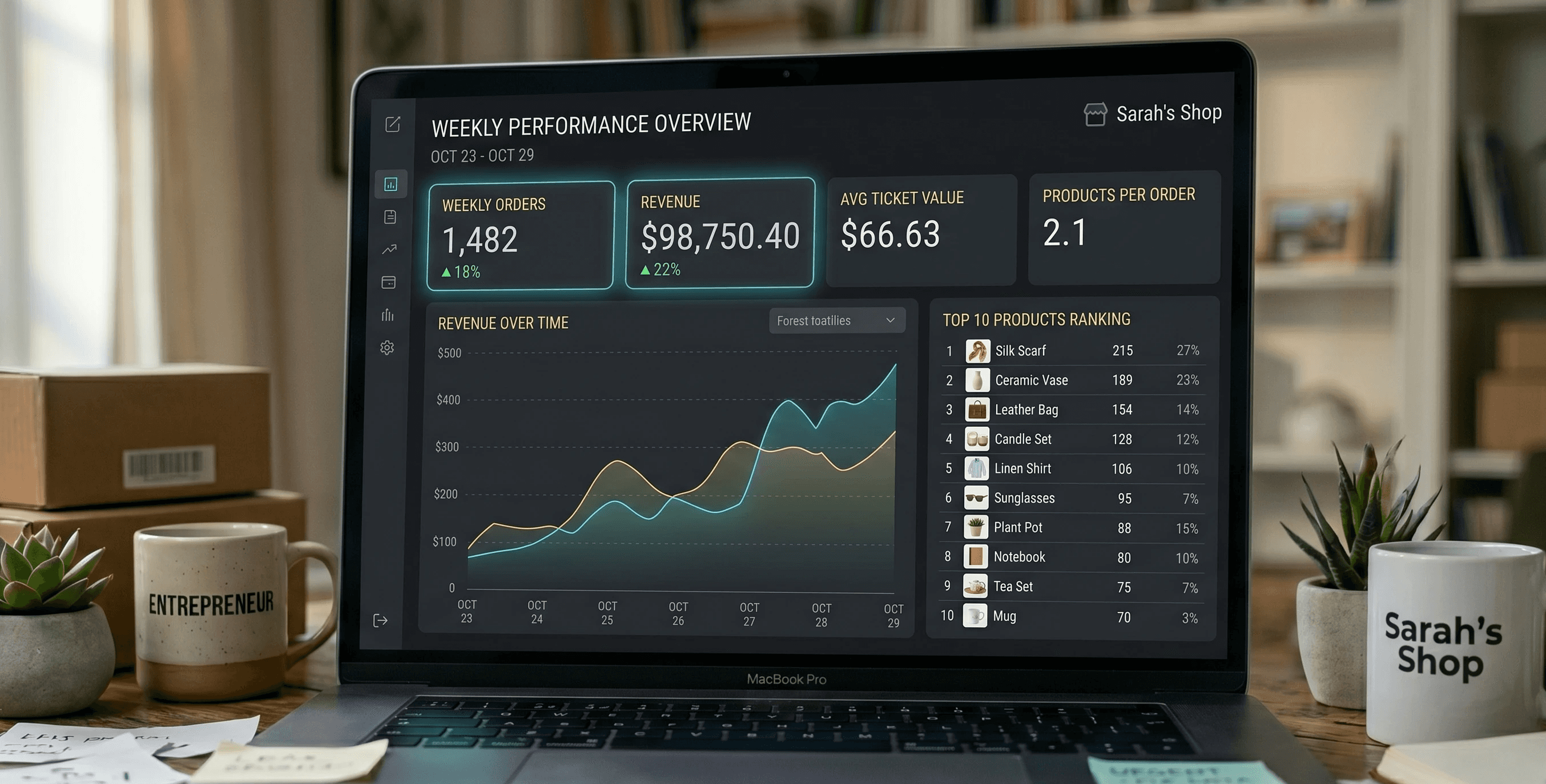
AI only improves when you analyze it. Review these basic KPIs each week:
Conversion rate: how many conversations end in sales.
Average ticket: measures if upselling is working.
Click ratio in messages: how many users follow your recommendations.
Response time: the lower it is, the better the perceived experience.
💡 If you notice that your AI offers well but doesn't convert, revise the timing or the copy. Often, the issue is not in the automation itself, but in when and how the offer is presented.
👉 Learn to interpret your numbers with our guide on how to make data-driven decisions.
💬 Conclusion: AI does not sell for you, it sells with you
Artificial intelligence on WhatsApp is not a robot that replaces sellers. It's a tool that amplifies what you already do well: understand your customers, offer solutions, and sell with empathy.
When you implement automatic upselling and cross-selling flows, you turn each chat into a business opportunity. The customer feels heard, even though the conversation is automated, and your brand gains agility without losing humanity.
The result: more sales, less repetitive work, and decisions backed by data. Because in the new conversational commerce, the brands that succeed are not the ones that talk the most, but those that listen best with AI. 🤖💬
WhatsApp has become the most direct and profitable channel for selling in LATAM. But if you only use it to respond to messages, you're leaving money on the table. Artificial intelligence can help you identify sales opportunities within each conversation: recommend products, offer premium versions, and retain customers effortlessly.
In this practical guide, I will tell you how to apply automatic upselling and cross-selling with AI in WhatsApp Business. I will show you how conversational flows work, how to segment customers, and how to turn data into real revenue.
💬 Why WhatsApp is the ideal channel to sell more
WhatsApp is the space where conversation feels natural. There are no forms or waits: just messages, quick responses, and trust. This closeness makes users more open to receiving suggestions if they feel attended to and understood.
Additionally:
📲 8 out of 10 people in LATAM prefer to contact via WhatsApp rather than email or networks.
💬 Conversations have a conversion rate 2.5x higher than other channels.
🤝 AI allows scaling without losing that human touch that makes the customer feel they are being spoken to, not just another entry in a database.
👉 If you are not yet generating traffic to your chats, check out how to do it with a step-by-step Meta Ads campaign.
⚙️ How artificial intelligence works in WhatsApp Business
AI not only responds to messages: it understands intention, context, and opportunity. It analyzes key phrases (“price,” “stock,” “promotion”), message tone, and historical behavior to determine the best response or recommendation.
This achieves three key tasks:
Detect purchase intent: recognizes when a user is close to making a purchase.
Recommend products or upgrades: offers complementary options or premium versions.
Personalize responses: adapts language, emojis, and offers to the type of customer.
💡 Example:
Customer: “Do you have waterproof backpacks?”
AI: “Yes 👌 and if you get the 25L version, it now includes a free rain cover. Would you like me to show you the available colors?”
👉 In our article on AI agents vs traditional customer service, we explain how these systems learn from each conversation and improve over time.
🚀 How to apply automatic upselling with AI
The upselling seeks for the customer to choose a superior version of the product or service they are already interested in. With AI, this process can be automated and sound natural, not forced.
💬 Practical strategies:
Activate contextual suggestions: if someone asks for a basic plan, offer the premium one highlighting benefits, not price. “For S/30 more, you get personalized support and an extended warranty 💪.”
Use urgency or convenience triggers: limited promotions, free shipping, or upgrades with added value.
Base it on history: AI can remember previous purchases and offer the next version or upgraded model.
🔥 Tip: the secret of effective upselling is in the copy. Learn to write persuasive messages in our copywriting guide for ads with AI.
🔄 How to apply intelligent cross-selling
The cross-selling seeks to complement what the customer is already going to buy. AI does this by analyzing real-time data and behavior patterns.
Classic example: if someone buys a camera, AI can offer a tripod, a case, or a memory card. But the important thing is when it does so: it should suggest it right before the final decision, not at the beginning.
📊 How to configure it:
Define complementary products by category (AI should know what goes with what).
Set conditional rules (“if buying X, offer Y”).
Personalize the response according to the customer's tone.
💬 Example:
“Perfect 🎥 I see you chose the Canon M50 camera. If you add a tripod, shipping is free. Are you interested in including it?”
👉 Learn how to improve the visual presentation of your products with product pages that convert.
🧩 How to design conversational flows with AI
A well-designed flow is like a digital seller: it guides, listens, and recommends.
💡 Ideal structure:
Personalized greeting: use the name and friendly tone.
Intent detection: AI interprets what the customer is looking for.
Contextual offer: responds with a clear and relevant proposal.
Closure with call to action: takes the conversation to the next step (“Do you want me to send you the link to purchase?”).
The best flows use variables such as location, time of day, or product category to refine the message. Thus, each conversation feels unique, even though it is automated.
👉 If you want to measure which messages work best, check out our guide to analyzing social media stats. It will help you interpret your conversation metrics.
Automation platforms like Yavendió! allow you to create these flows visually and add conversational AI that adapts the message according to product category, time, or purchase history. Thus, each conversation feels unique, even though it is automated.
📈 How to measure the impact of your automations
AI only improves when you analyze it. Review these basic KPIs each week:
Conversion rate: how many conversations end in sales.
Average ticket: measures if upselling is working.
Click ratio in messages: how many users follow your recommendations.
Response time: the lower it is, the better the perceived experience.
💡 If you notice that your AI offers well but doesn't convert, revise the timing or the copy. Often, the issue is not in the automation itself, but in when and how the offer is presented.
👉 Learn to interpret your numbers with our guide on how to make data-driven decisions.
💬 Conclusion: AI does not sell for you, it sells with you
Artificial intelligence on WhatsApp is not a robot that replaces sellers. It's a tool that amplifies what you already do well: understand your customers, offer solutions, and sell with empathy.
When you implement automatic upselling and cross-selling flows, you turn each chat into a business opportunity. The customer feels heard, even though the conversation is automated, and your brand gains agility without losing humanity.
The result: more sales, less repetitive work, and decisions backed by data. Because in the new conversational commerce, the brands that succeed are not the ones that talk the most, but those that listen best with AI. 🤖💬
Oct 13, 2025
Bring the magic to your sales TODAY!
Get a demo


Bring the magic to your sales TODAY!
Get a demo
@2024 YA VENDIO - All rights reserved
@2024 YA VENDIO - All rights reserved