Meet Yago, your business partner on WhatsApp
Meet Yago, your business partner on WhatsApp
Oct 27, 2025
AI Seller Vs Chatbot: 7 Differences That Boost Your Sales
Guide to choosing between chatbot, virtual assistant, and AI Seller without losing sales along the way.
Silvana Cabrera
IA Seller vs Chatbot: 7 Differences That Boost Your Sales
Guide to choosing between chatbot, virtual assistant, and IA Seller without losing sales along the way.
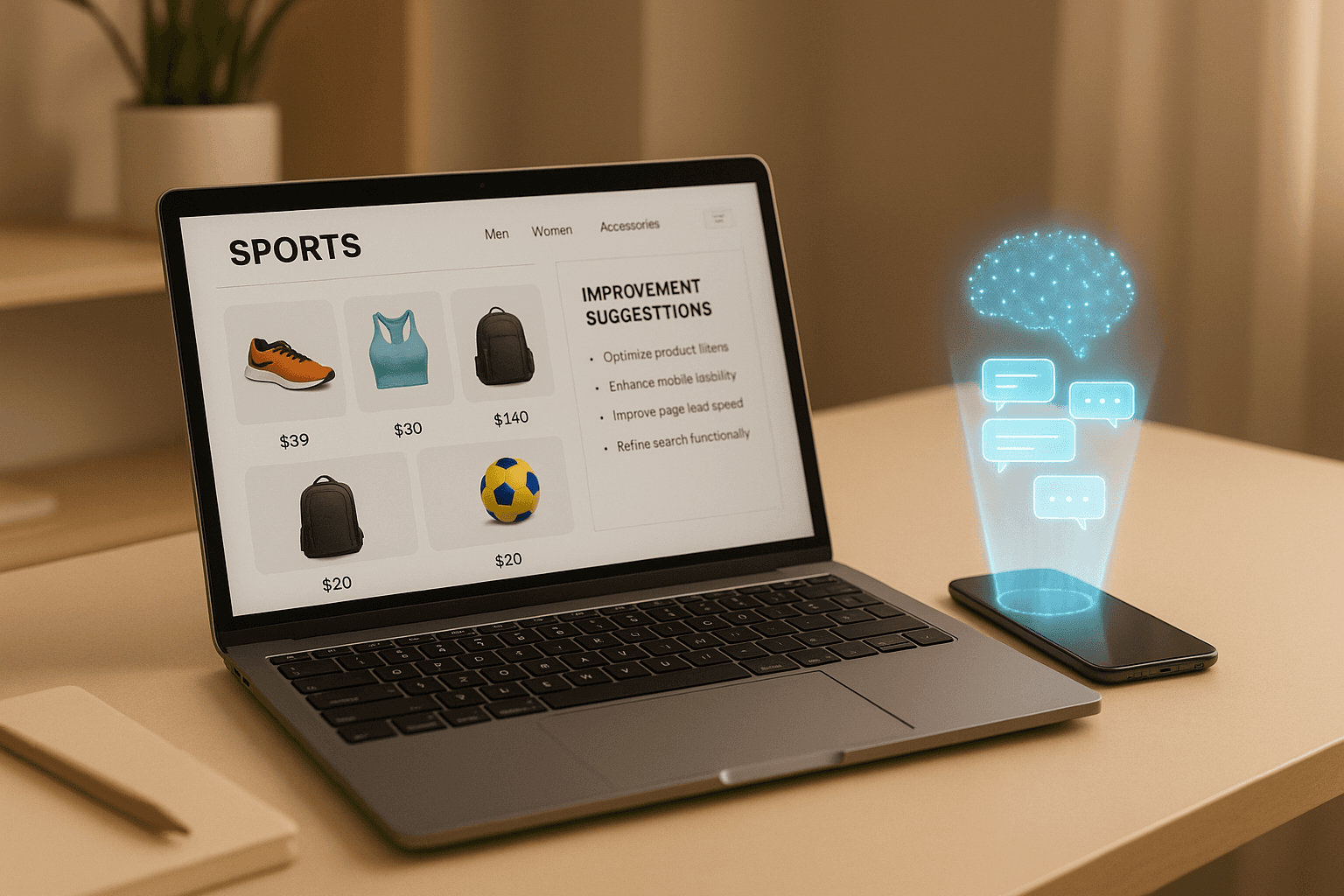
Conversational commerce is growing every day in Latin America. More and more businesses are selling through WhatsApp, social media, and websites with integrated chat, but along with that growth comes a recurring question: “Do I need a chatbot, a virtual assistant, or an IA agent to sell more?”.
The difference between a chatbot and a virtual assistant may seem small in theory, but in practice, it marks the line between simply responding to messages and closing sales. A traditional chatbot is designed for guiding menus and responding to basic queries. An IA Seller (a conversational IA agent like Yavendió!'s) is designed to understand intention, recommend products, upsell, and assist with payment.
In this guide, I explain with concrete examples the difference between a chatbot and an IA agent, and the 7 key differences that directly impact your sales.
💬 1. From “questions and answers” to conversations that sell
The way they understand (or not) the customer
A traditional chatbot works like a decision tree: buttons, numbered options, exact phrases. If the customer goes off the script, the conversation breaks.
Typical chatbot example:
Customer: “Hi, I want to change my size.”
Chatbot: “Press 1 to buy, 2 to talk to support.”
On the other hand, a conversational IA agent understands the intention, even if the message isn't perfect, and responds naturally:
Customer: “Hi, I want to change my size, the M was too small for me.”
IA Seller: “Sure 😊 I'll help you with the change. Do you want size L or would you prefer to look at another similar item?”
This is one of the most important differences between a chatbot and an IA agent:
The chatbot waits for keywords.
The IA Seller interprets context, emotions, and objectives.
📋 2. Static menus vs seller asking smart questions
The depth of interaction
A chatbot is ideal for very clear and repetitive flows:
Check schedules
Share address
Send a simple catalog
Confirm an order number
That works for basic support but falls short when the customer needs guidance.
An IA Seller not only responds:
Asks questions to understand what the customer is looking for.
Filters options according to budget, preferences, or urgency.
Suggests alternatives when something is out of stock.
Example:
Customer: “I’m looking for a gift for a woman, around S/100.”
IA Seller: “Perfect 🎁 For what occasion is the gift? Birthday, anniversary, or something else?”
Customer: “Birthday.”
IA Seller: “Great. I recommend these three options between S/90 and S/120 that come with gift wrapping. Do you want me to show you pictures?”
🧠 3. Fixed rules vs constant learning
How they adapt to your business
Most chatbots work with fixed rules: if the customer types “price”, they show a response; if they type “shipping”, they show another. That's useful but limited.
An IA agent can:
Detect frequently asked questions and improve its responses.
Understand which product combinations work best.
Recognize repeated objections and adjust how it responds.
In practice, the difference between a chatbot and an IA agent is that the chatbot remains the same until someone reconfigures it, while the IA agent evolves with your business.
With Yavendió!, your IA Seller learns from conversations and allows you to adjust tone, catalog, and responses without starting from scratch.
🛒 4. Answering questions vs driving the customer towards payment
Direct impact on conversions
A chatbot usually stays at:
“Here is the catalog.”
“These are the payment methods.”
“This is the account number.”
It does not actively guide the customer towards purchase.
An IA Seller is designed to:
Detect when the customer is ready to buy.
Summarize the decision (“So you would take X…”).
Offer the most convenient payment method.
Close with a clear call to action.
Example:
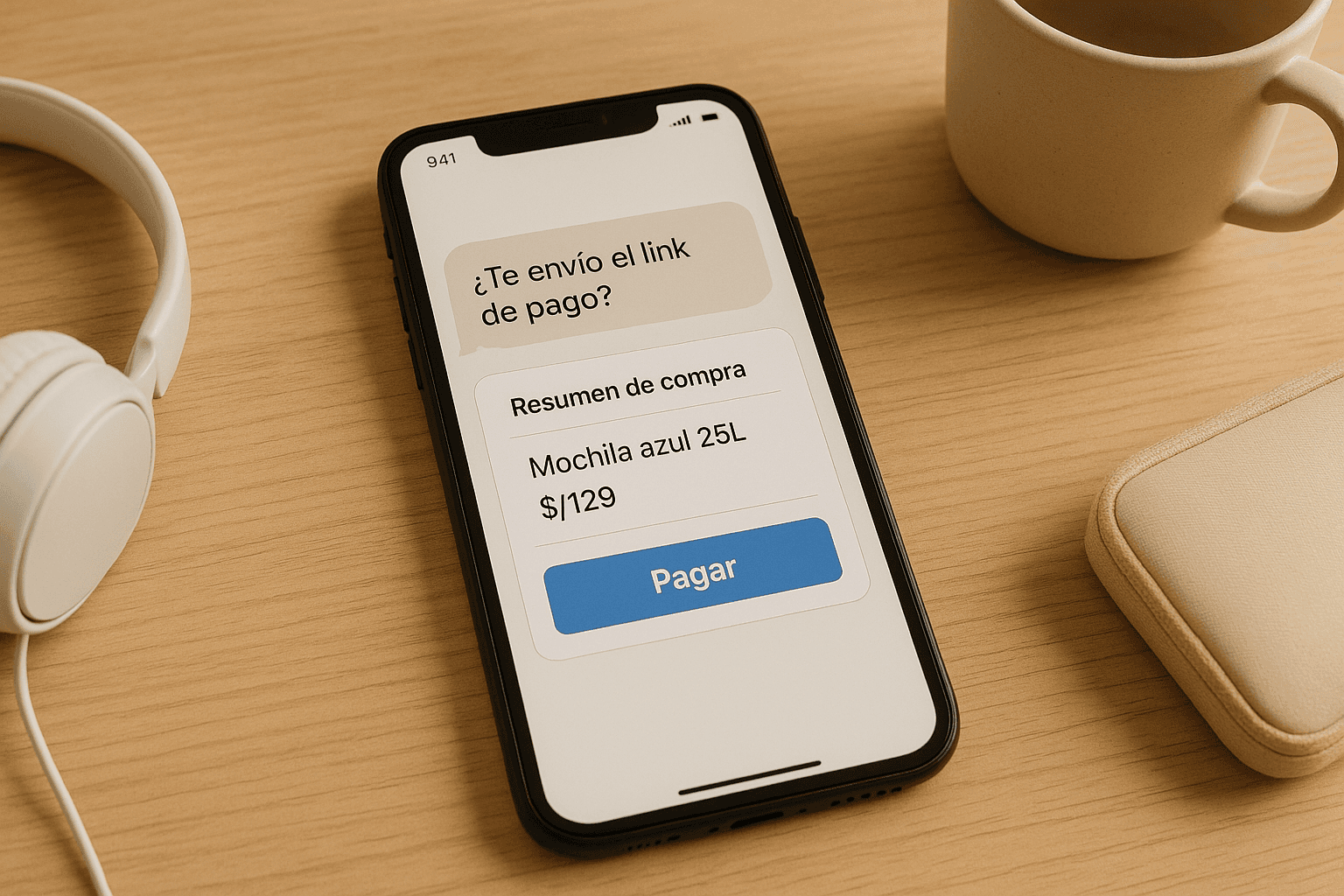
Customer: “I think I'll take the blue 25-liter backpack.”
IA Seller: “Great choice 💙. It will be S/129. Should I send you the payment link through WhatsApp or do you prefer Yape/Plin?”
📈 5. No clear metrics vs seller that feeds your data
Measurement and continuous improvement
Many basic chatbots show you nothing more than “number of conversations” or “messages sent”. With that, you can't make business decisions.
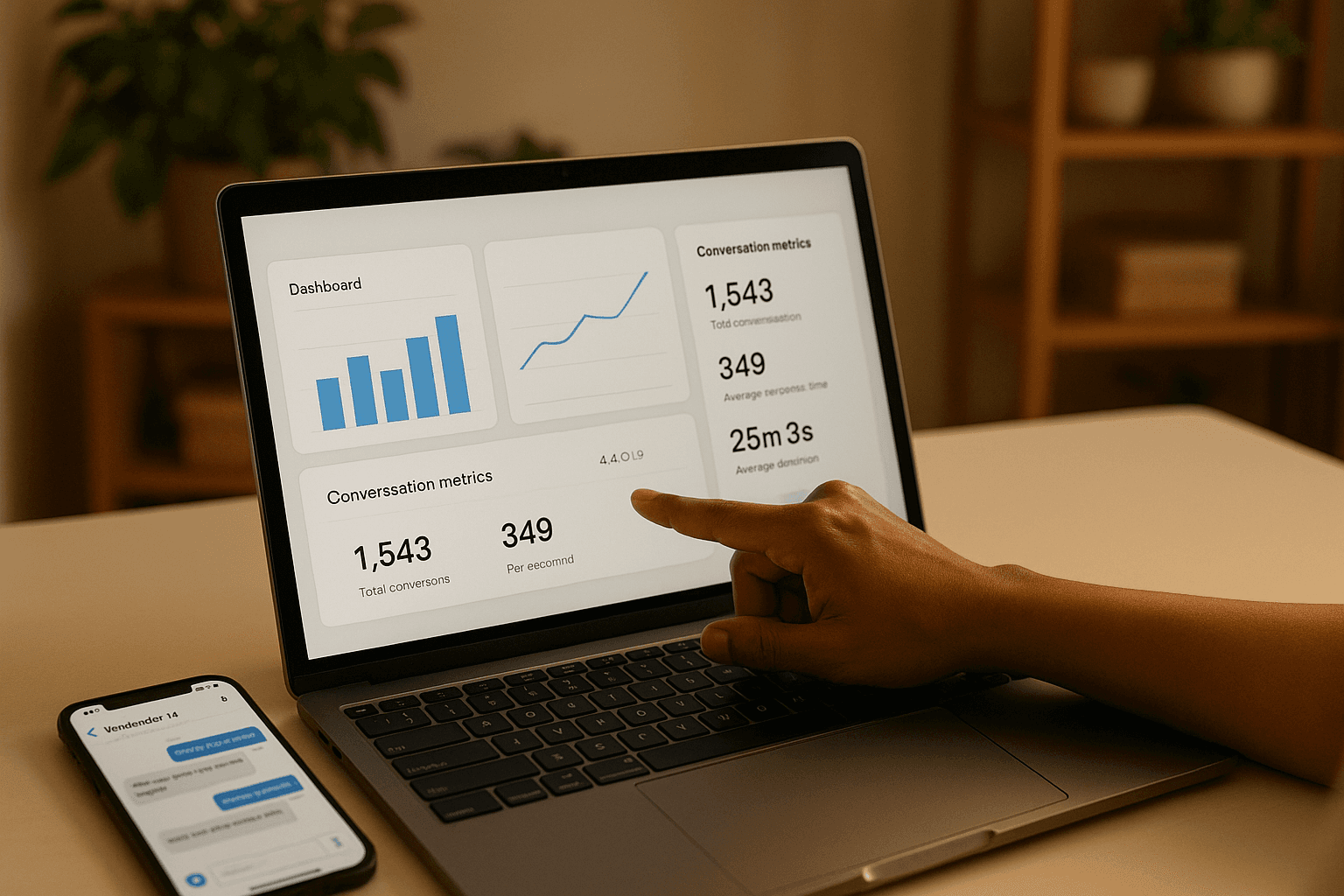
An IA Seller connected to Yavendió! shows you:
Conversations that end in a sale
Average ticket per channel
Most consulted products
Sales abandonment points
It's the difference between saying “I feel like the chatbot helps” and being able to state “my IA Seller closed 37 sales this week and increased my average ticket by 18%.”
🔄 6. When a chatbot is enough (and when it is no longer sufficient)
Choosing wisely to neither overrate nor underestimate the technology
✔️ A traditional chatbot works well if:
You receive few repetitive questions.
You only want to automate schedules, addresses, or policies.
Your operation is very simple.
❌ A chatbot falls short if:
You have a broad catalog (fashion, beauty, home, technology).
Your customers need help deciding.
You want to apply automatic upselling and cross-selling.
You operate outside business hours and don't want to lose sales.
In these cases, an IA Seller does make a difference: it guides, suggests, reminds, and follows up.
🤝 7. Divert everything vs working as a team
In many chatbots, the only way out when something gets complicated is: “Type AGENT to talk to a human.” In a modern conversational commerce approach, IA does not replace the team: it works with it.
A well-configured IA Seller:
Resolves the repetitive (frequently asked questions, basic data, initial follow-ups).
Filters leads and leaves only the most valuable conversations.
Escalates complex cases to a human when it detects frustration, sensitive queries, or high amounts.
Leaves context ready: the human advisor enters the conversation knowing what the customer asked, what they saw, and any objections they had.
This transforms the operation: less time responding to “how much does it cost?” and more time closing big sales, negotiating, and creating relationships. The IA does not sell instead of your team: it sells with them.
Result: less time responding to the same questions, more time closing sales.
🧩 Quick Summary
To break it down, we can see it like this:
Traditional chatbot:
Rule-based and menu-driven.
Ideal for basic support and simple queries.
Little context, little personalization.
Generic virtual assistant:
Can respond a bit more freely.
Helps with support and assistance tasks.
Useful but not always optimized for selling.
IA Seller (conversational IA agent for sales)
Designed to understand intent, recommend products, and close sales.
Integrates with your catalog, payment methods, and metrics.
Learns over time and helps increase average ticket value.
When someone searches for “chatbot and virtual assistant” or “difference between chatbot and IA agent,” they are essentially asking: “What technology truly helps me sell more and better attend to my customers?”.
🚀 Where does Yavendió! come in?
With Yavendió! you can create your IA Seller for WhatsApp without needing to know how to program or pay for a complex license to start. Your agent can respond with your brand tone, recommend products automatically, and measure how many conversations end in a sale.
If you're just starting, the free version is perfect to test how different it is to serve with IA. When your business grows, professional plans allow you to integrate payments, advanced flows, and detailed reports.
🧭 Conclusion
The difference between a chatbot and an IA agent is not technical; it's strategic. A chatbot responds; an IA Seller listens, guides, recommends, and closes. In a market where every message can be a sale, an IA Seller stops being “just another tool” and becomes a key member of your commercial team. 🤖💬🚀
IA Seller vs Chatbot: 7 Differences That Boost Your Sales
Guide to choosing between chatbot, virtual assistant, and IA Seller without losing sales along the way.
Conversational commerce is growing every day in Latin America. More and more businesses are selling through WhatsApp, social media, and websites with integrated chat, but along with that growth comes a recurring question: “Do I need a chatbot, a virtual assistant, or an IA agent to sell more?”.
The difference between a chatbot and a virtual assistant may seem small in theory, but in practice, it marks the line between simply responding to messages and closing sales. A traditional chatbot is designed for guiding menus and responding to basic queries. An IA Seller (a conversational IA agent like Yavendió!'s) is designed to understand intention, recommend products, upsell, and assist with payment.
In this guide, I explain with concrete examples the difference between a chatbot and an IA agent, and the 7 key differences that directly impact your sales.
💬 1. From “questions and answers” to conversations that sell
The way they understand (or not) the customer
A traditional chatbot works like a decision tree: buttons, numbered options, exact phrases. If the customer goes off the script, the conversation breaks.
Typical chatbot example:
Customer: “Hi, I want to change my size.”
Chatbot: “Press 1 to buy, 2 to talk to support.”
On the other hand, a conversational IA agent understands the intention, even if the message isn't perfect, and responds naturally:
Customer: “Hi, I want to change my size, the M was too small for me.”
IA Seller: “Sure 😊 I'll help you with the change. Do you want size L or would you prefer to look at another similar item?”
This is one of the most important differences between a chatbot and an IA agent:
The chatbot waits for keywords.
The IA Seller interprets context, emotions, and objectives.
📋 2. Static menus vs seller asking smart questions
The depth of interaction
A chatbot is ideal for very clear and repetitive flows:
Check schedules
Share address
Send a simple catalog
Confirm an order number
That works for basic support but falls short when the customer needs guidance.
An IA Seller not only responds:
Asks questions to understand what the customer is looking for.
Filters options according to budget, preferences, or urgency.
Suggests alternatives when something is out of stock.
Example:
Customer: “I’m looking for a gift for a woman, around S/100.”
IA Seller: “Perfect 🎁 For what occasion is the gift? Birthday, anniversary, or something else?”
Customer: “Birthday.”
IA Seller: “Great. I recommend these three options between S/90 and S/120 that come with gift wrapping. Do you want me to show you pictures?”
🧠 3. Fixed rules vs constant learning
How they adapt to your business
Most chatbots work with fixed rules: if the customer types “price”, they show a response; if they type “shipping”, they show another. That's useful but limited.
An IA agent can:
Detect frequently asked questions and improve its responses.
Understand which product combinations work best.
Recognize repeated objections and adjust how it responds.
In practice, the difference between a chatbot and an IA agent is that the chatbot remains the same until someone reconfigures it, while the IA agent evolves with your business.
With Yavendió!, your IA Seller learns from conversations and allows you to adjust tone, catalog, and responses without starting from scratch.
🛒 4. Answering questions vs driving the customer towards payment
Direct impact on conversions
A chatbot usually stays at:
“Here is the catalog.”
“These are the payment methods.”
“This is the account number.”
It does not actively guide the customer towards purchase.
An IA Seller is designed to:
Detect when the customer is ready to buy.
Summarize the decision (“So you would take X…”).
Offer the most convenient payment method.
Close with a clear call to action.
Example:
Customer: “I think I'll take the blue 25-liter backpack.”
IA Seller: “Great choice 💙. It will be S/129. Should I send you the payment link through WhatsApp or do you prefer Yape/Plin?”
📈 5. No clear metrics vs seller that feeds your data
Measurement and continuous improvement
Many basic chatbots show you nothing more than “number of conversations” or “messages sent”. With that, you can't make business decisions.
An IA Seller connected to Yavendió! shows you:
Conversations that end in a sale
Average ticket per channel
Most consulted products
Sales abandonment points
It's the difference between saying “I feel like the chatbot helps” and being able to state “my IA Seller closed 37 sales this week and increased my average ticket by 18%.”
🔄 6. When a chatbot is enough (and when it is no longer sufficient)
Choosing wisely to neither overrate nor underestimate the technology
✔️ A traditional chatbot works well if:
You receive few repetitive questions.
You only want to automate schedules, addresses, or policies.
Your operation is very simple.
❌ A chatbot falls short if:
You have a broad catalog (fashion, beauty, home, technology).
Your customers need help deciding.
You want to apply automatic upselling and cross-selling.
You operate outside business hours and don't want to lose sales.
In these cases, an IA Seller does make a difference: it guides, suggests, reminds, and follows up.
🤝 7. Divert everything vs working as a team
In many chatbots, the only way out when something gets complicated is: “Type AGENT to talk to a human.” In a modern conversational commerce approach, IA does not replace the team: it works with it.
A well-configured IA Seller:
Resolves the repetitive (frequently asked questions, basic data, initial follow-ups).
Filters leads and leaves only the most valuable conversations.
Escalates complex cases to a human when it detects frustration, sensitive queries, or high amounts.
Leaves context ready: the human advisor enters the conversation knowing what the customer asked, what they saw, and any objections they had.
This transforms the operation: less time responding to “how much does it cost?” and more time closing big sales, negotiating, and creating relationships. The IA does not sell instead of your team: it sells with them.
Result: less time responding to the same questions, more time closing sales.
🧩 Quick Summary
To break it down, we can see it like this:
Traditional chatbot:
Rule-based and menu-driven.
Ideal for basic support and simple queries.
Little context, little personalization.
Generic virtual assistant:
Can respond a bit more freely.
Helps with support and assistance tasks.
Useful but not always optimized for selling.
IA Seller (conversational IA agent for sales)
Designed to understand intent, recommend products, and close sales.
Integrates with your catalog, payment methods, and metrics.
Learns over time and helps increase average ticket value.
When someone searches for “chatbot and virtual assistant” or “difference between chatbot and IA agent,” they are essentially asking: “What technology truly helps me sell more and better attend to my customers?”.
🚀 Where does Yavendió! come in?
With Yavendió! you can create your IA Seller for WhatsApp without needing to know how to program or pay for a complex license to start. Your agent can respond with your brand tone, recommend products automatically, and measure how many conversations end in a sale.
If you're just starting, the free version is perfect to test how different it is to serve with IA. When your business grows, professional plans allow you to integrate payments, advanced flows, and detailed reports.
🧭 Conclusion
The difference between a chatbot and an IA agent is not technical; it's strategic. A chatbot responds; an IA Seller listens, guides, recommends, and closes. In a market where every message can be a sale, an IA Seller stops being “just another tool” and becomes a key member of your commercial team. 🤖💬🚀
Oct 27, 2025
Discover More

Los leads no se pierden solos, se pierden cuando nadie hace seguimiento
Los leads no se pierden solos, se pierden cuando nadie hace seguimiento
🛒 Tu cliente no se fue por el precio, se fue por falta de confianza
🛒 Tu cliente no se fue por el precio, se fue por falta de confianza
Bring the magic to your sales TODAY!
Get a demo


Bring the magic to your sales TODAY!
Get a demo
@2024 YA VENDIO - All rights reserved
@2024 YA VENDIO - All rights reserved